Alberta Driving Rules & Safety
Alberta Traffic Safety Act: Essential Rules for Calgary Drivers
Understand the Alberta Traffic Safety Act and the essential driving rules every Calgary motorist should know, from licensing and insurance to distracted driving and road safety.
 Written by Jigar Dadawala
Published 7 min read
Jump to a section
Driving in Calgary means sharing the road with pedestrians, cyclists, commercial vehicles and thousands of other motorists every day. Whether you are a new driver preparing for your Class 5 licence or an experienced driver, understanding Alberta’s traffic laws is essential.
The Alberta Traffic Safety Act (Chapter T-6) establishes important rules for drivers, vehicles and road safety across the province. It covers everything from driver licensing and vehicle registration to traffic violations, accident responsibilities and enforcement.
Knowing these rules is not just about avoiding tickets. It is about making responsible decisions, protecting other road users and developing safe driving habits.
Here are some important parts of Alberta’s Traffic Safety Act that every Calgary driver should understand.
1. Always Carry a Valid Driver’s Licence
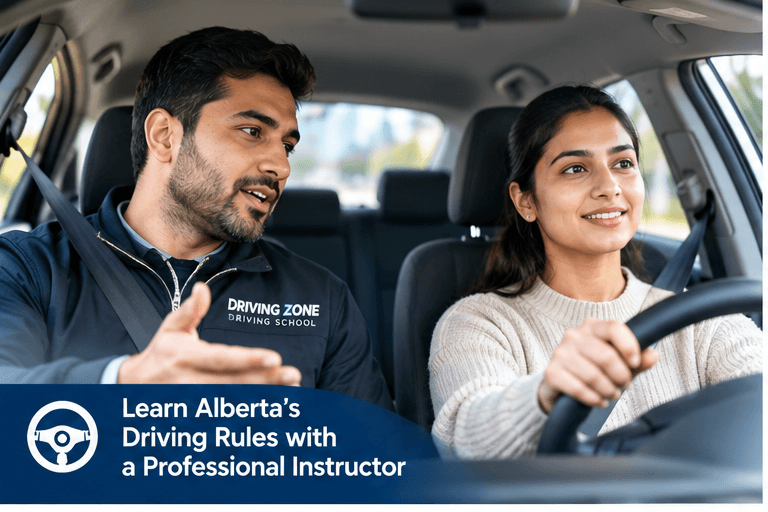
Before driving on Alberta roads, you must hold a valid driver's licence that permits you to operate the vehicle.
Alberta has different licence classes and stages. New drivers generally begin with a Class 7 learner’s licence before progressing through the Graduated Driver Licensing (GDL) system.
Drivers must understand the conditions attached to their licence. These may include supervision requirements, passenger restrictions and other applicable conditions.
Driving without a valid licence or failing to follow licence conditions can result in penalties.
Driving tip: If you are a learner, understand your licence restrictions before getting behind the wheel. Ask your driving instructor to explain any conditions you are unsure about.
2. Keep Your Vehicle Registration and Insurance Up to Date
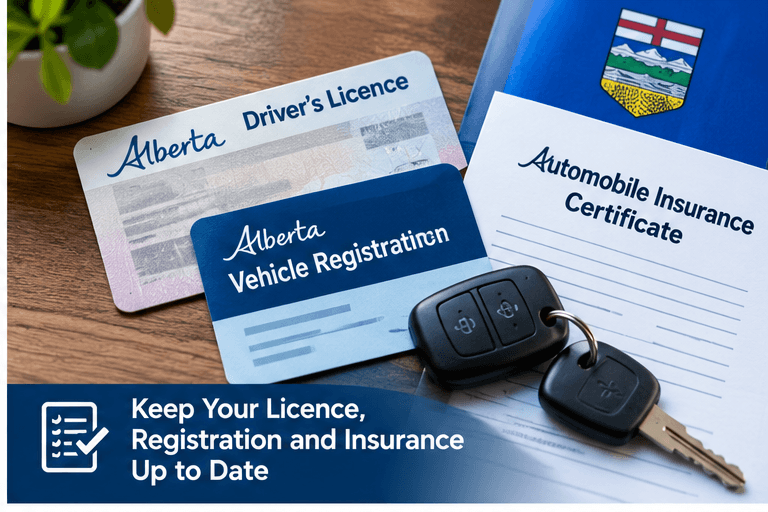
Every driver is responsible for ensuring that the vehicle they operate meets Alberta's legal requirements.
This includes having:
Valid vehicle registration and licence plates
Required automobile insurance
A vehicle that meets applicable equipment and safety standards
Alberta requires drivers to carry proof of insurance. You should also know where your registration and insurance documents are kept and be able to provide them when legally required.
Driving an uninsured or improperly registered vehicle can lead to serious consequences.
Driving tip: Check your registration and insurance expiry dates regularly. Do not assume that someone else has renewed them.
3. Follow Speed Limits and Traffic Signs
Speed limits and traffic control devices help manage traffic and reduce the risk of collisions.
Alberta drivers must obey posted speed limits, traffic signals, stop signs, yield signs and other road instructions.
Pay particular attention to:
School zones and playground zones
Construction and roadwork areas
Pedestrian crossings
Stop signs and yield signs
Traffic lights and lane-control signs
A speed that feels comfortable on an open road may be unsafe in a residential area or near a school.
Remember that road and weather conditions also matter. Rain, snow, ice and poor visibility may require you to drive below the posted speed limit.
Driving tip: Look ahead, identify signs early and adjust your speed before reaching intersections, crossings and changing road conditions.
4. Understand Alberta’s Distracted Driving Rules
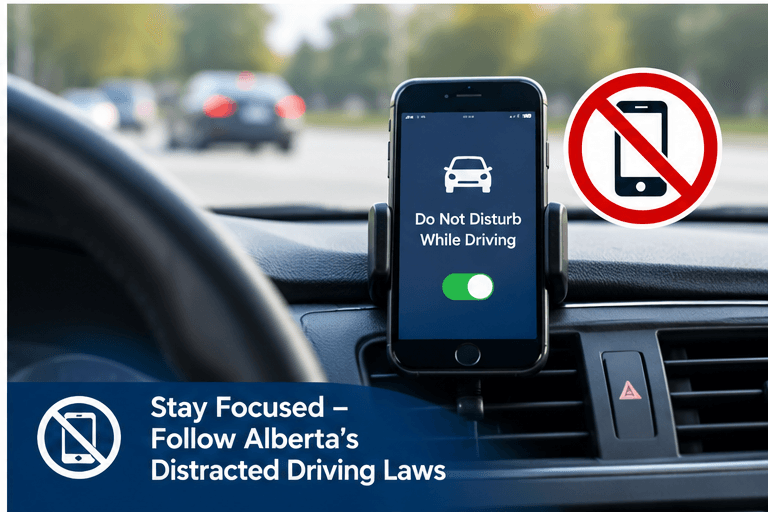
Distracted driving is a serious road safety concern. Even a moment of inattention can affect your ability to react to a sudden hazard.
Alberta's distracted driving rules restrict activities such as using a hand-held mobile phone while driving, texting, reading messages and interacting with prohibited electronic devices or visible screens.
Drivers should keep their attention on the road and avoid activities that take their focus away from driving.
Common distractions include:
Checking messages or notifications
Holding or operating a phone
Programming or interacting with a screen
Reading while driving
Allowing passengers or other activities to interfere with concentration
Driving tip: Set your navigation, music and destination before starting your journey. If you need to use your phone, pull over somewhere safe and legally permitted first.
5. Know the Rules at Intersections and Pedestrian Crossings
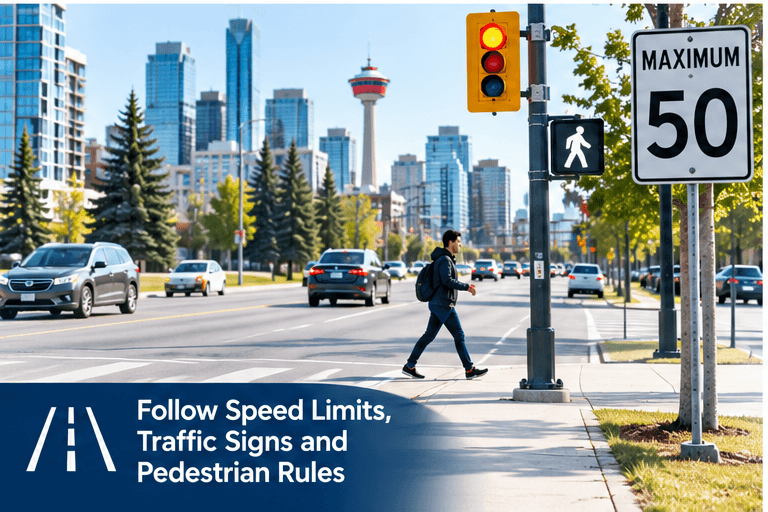
Intersections require careful observation and good decision-making. Many collisions happen when drivers fail to yield, misjudge another vehicle's movement or overlook pedestrians.
Every driver should understand:
When to stop at a stop sign
How to identify who has the right of way
When to yield to pedestrians
How to make safe left and right turns
How to check for cyclists and approaching traffic
Never assume another driver will follow the rules. Observe carefully and make sure the road is clear before proceeding.
Driving tip: Practise proper mirror checks, shoulder checks and observation before turning or changing lanes. These habits are essential for everyday driving and road test preparation.
6. Understand Demerit Points and Driving Penalties
Alberta uses a demerit point system to monitor driving behaviour and encourage responsible road use.
When a driver commits certain traffic offences, demerit points may be added to their driving record. Accumulating too many points can result in a licence suspension.
Depending on the offence, drivers may also face fines, administrative penalties, vehicle seizures or other consequences.
Serious offences, including impaired driving, can result in additional sanctions and significant restrictions on driving privileges.
The consequences depend on the offence and the applicable legislation. Drivers should not assume that every violation carries the same penalty.
Driving tip: Treat traffic rules as everyday responsibilities, not just requirements to remember for a driving test. Safe driving habits help protect your licence and everyone around you.
7. What Should You Do After a Collision?
Being involved in a collision can be stressful, particularly for new drivers. However, knowing your responsibilities beforehand can help you respond calmly.
Depending on the circumstances, drivers involved in a collision may be required to:
Stop and remain at the scene when required by law
Provide assistance where necessary
Exchange relevant information with other involved parties
Report the collision to police when reporting requirements apply
Cooperate with the appropriate authorities
Never leave a collision scene when the law requires you to remain.
If someone is injured or there is an immediate danger, contact emergency services.
Driving tip: Keep calm, prioritize safety and understand the reporting requirements that apply to the collision.
8. Why New Drivers Should Learn These Rules Early
Learning to drive is about much more than operating a steering wheel, accelerating and braking. A responsible driver understands road signs, traffic laws, other road users and potential hazards.
For new drivers in Calgary, learning Alberta's traffic rules early can help build confidence and improve decision-making.
Professional driving lessons can help you practise:
Safe lane changes and shoulder checks
Intersections and right-of-way
Speed control and following distance
Parking and vehicle manoeuvres
Hazard awareness and defensive driving
Observation and decision-making
At Driving Zone Driving School, our goal is to help learners develop safe driving habits through patient guidance and practical, one-on-one instruction.
Explore our driving courses in Calgary to find a suitable learning option.
Frequently Asked Questions
What is Alberta's Traffic Safety Act?
The Alberta Traffic Safety Act is provincial legislation that establishes rules relating to driver licensing, vehicle operation, registration, traffic safety and enforcement.
Do I need to carry proof of insurance while driving in Alberta?
Drivers must have valid automobile insurance and be able to provide proof when legally required. Keep your insurance documents accessible.
What happens if I receive demerit points in Alberta?
Demerit points are recorded against your driving record for certain offences. Accumulating too many points can lead to a licence suspension. The applicable thresholds depend on your licence status.
Does Alberta's distracted driving law apply when I am stopped at a red light?
Drivers should not assume that stopping temporarily in traffic makes prohibited phone use legal. Follow Alberta's distracted driving requirements and avoid handling your phone while operating a vehicle.
Where can I learn more about Alberta driving laws?
You can consult the official Alberta legislation through the Alberta King's Printer and review Alberta's official Driver's Guide for practical driving rules and guidance.
Final Thoughts
Understanding Alberta's Traffic Safety Act is an important part of becoming a responsible driver. From carrying valid documents to following speed limits, avoiding distractions and understanding your responsibilities after a collision, every rule contributes to safer roads.
Whether you are preparing for your first driving lesson or improving your existing skills, make road safety a daily priority.
Ready to become a more confident driver in Calgary?
Contact Driving Zone Driving School and take the next step towards safer driving.
Driving Zone Driving School
Calgary, Alberta
Phone: 403-831-8888
Website: https://www.drivingzonecalgary.ca/
Disclaimer: This article is intended for general educational purposes and is not legal advice. Traffic laws and penalties may change. Refer to the current Alberta legislation and official government guidance for authoritative and up-to-date requirements.